Saturday, March 16, 2013

Acting like tourists


Goodbye Bocas!
Today we flew back to Panama City! We were going to spend one day as tourists instead of researchers. When we landed in Panama City, we made our way back to the hotel we had stayed at on the first night and grabbed a bite to eat for lunch. After lunch, our professor dropped us off at the Panama Canal and then went to the doctor’s office to check out his arm. It was hurting him a lot more today than yesterday. The Panama Canal was amazing! Even though it was later in the day, we were able to see a few massive ships pass through the levy system. There are three levies throughout the Panama Canal, one on the Atlantic side and two on the Pacific side. In the middle of the levies, a ship can propel itself forward reasonably fast because the river is deep and wide. However, when the large container ships approach the levies, they have to turn off their engines and attach lines to two motorized little trains on the sides of the canal. These little carts weigh hundreds of tons and pull the ships at slow speeds through the levies. It is necessary so that the ship won’t crash into the sides of the canal. This applies only to the really large ships. Multiple small ships can pass through at once. The water level in the levy increases and decreases at an extremely fast rate (10 minutes) and each ship can quickly pass through and head to open water.
The levies!
A ship entering the levy system

It was fascinating to watch the ships pass through the canal, but they also had a museum that informed people about a variety of topics dealing with the canal, from how it was built to the flora and fauna of the region it passes through. Since it was close to closing time for visitors (the canal operates 24/7, but is only open to visitors until 4 pm), the museum was almost empty and we were able to have a little fun!

The view from South America!
Outside the museum, we waited until our driver came to pick us up. Our professor was not finished with his doctor’s appointment yet. The driver knew what we wanted to do though. He drove us across the Panama Canal Bridge so that we could officially be in SOUTH AMERICA!! We were so excited! Panama is located in North and South America, so we didn’t enter a new country. The Panama Canal splits the two continents, so we were technically in South America. This is continent number two in my list of continents that I will be visiting this weekend. By Tuesday morning, I will have been in four continents!

The ruins of a jail
A beautiful cathedral in the old
downtown area
Eventually, we drove back from South America and went to pick up our professor at the hospital. When he walked out, we noticed that he had acquired a bright blue cast! He had not only broken his arm, but he had broken it in multiple places and compressed the head of the bone. The doctors had to manipulate his arm to set the bones back in place! Ouch!! He was a trooper, though, and still took us on a tour of the historical parts of the city. We saw the ruins from when Captain Morgan came to this city as well as the original parts of the downtown area that they are busy renovating. We saw an old jail that was built below the high tide mark. When the tide rose, the prison cells would become extremely hot and humid and make the conditions in the cells even more miserable. The city was so interesting because it was a combination of the old and the new. You can see the ruins of a cathedral, but in the background, you can see the Panama City skyline filled with skyscrapers.

After dinner, we presented our final presentations and were officially done with the class! It was a wonderful experience and one that I will never forget. Some of my classmates liked it so much that they are planning to live in Panama later in life. I might not go so far as that, but I would love to come back! 


Last night in Panama!

Friday, March 15, 2013

Meet Fredrick

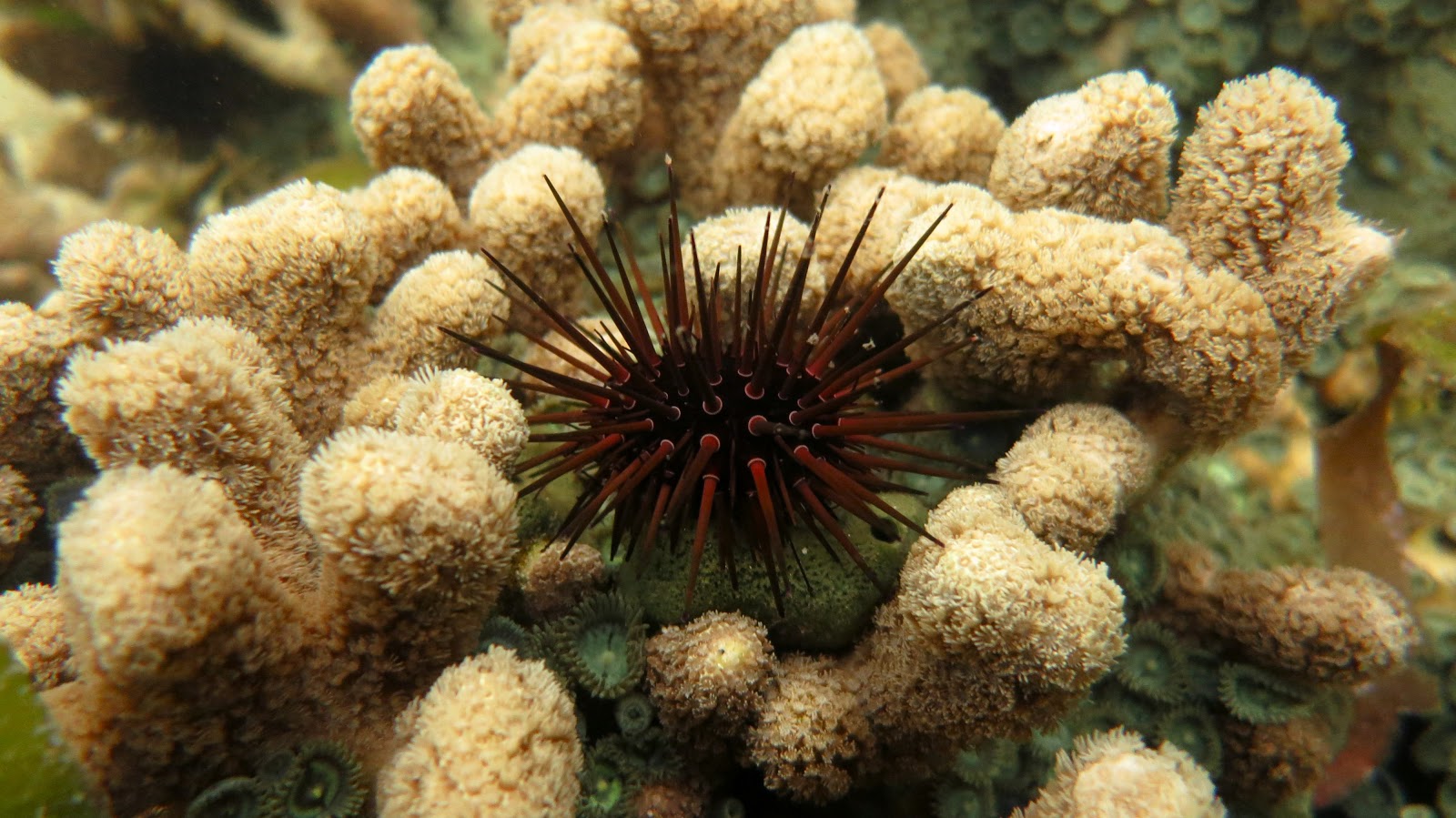
When we woke up this morning, we were expecting to spend the day learning about corals. Today was going to be a pretty chill day of snorkeling and then we would have time to work on our presentations. Unfortunately, at breakfast our professor confessed that there were actually a few more hermit crab experiments that we would have to do. We weren’t exactly excited about this prospect, but we know that it was necessary. We had the chance to snorkel around the corals in the morning. We went out with a woman who has been studying corals for many years while our professor went to collect more hermit crabs. She taught us about all the different types of corals you could find in this area and every time we spotted something unusual, she was able to explain exactly what it was. We learned so much in such a short time and we had a blast!

Intense coral discussion
After lunch, we set up the crab experiment again and got to work. It took the rest of the day. We observed them and then had to take them all out of their shells again and weigh them.
While I was not paying attention, our professor wanted to take down our experimental apparatus, so he climbed up on a table. We watched in horror as the table started to wobble and in an instant, he had fallen to the ground. At first, I thought he had broken his hip. That would have been terrible because the medical facilities here are non-existent. He grabbed his wrist instead and was pretty sure he sprained it. He planned to get it checked out when we arrived in Panama City tomorrow. For now, we supported his wrist between two clipboards and secured everything together with duct tape. Not exactly the best method, but we did what we could.

As we continued to work on our hermit crab data late into the night, some of us went a little crazy. We found a gigantic frog and named him Fredrick. I thought he was great, but from his expression, the feeling wasn't mutual.


P.S. Don't tell Nick :)

Thursday, March 14, 2013

"In the mangroves, the mighty mangroves..."

We worked on the mangroves again today! After breakfast, we jumped in the boat and headed to a small mangrove island. Our goal was to walk into the middle of the island, although I was very confused about how we would accomplish that. From what I have seen of mangroves, they are surrounded by an interconnected web of roots that is impossible to hike over. Turns out, it isn’t impossible and we walked carefully from root to root until we reached solid ground. This “solid” ground is composed of all the dead matter and is extremely mushy, but at least we could walk on it.

Our goal was to collect mangrove leaves from the base of the trees and the tops of the trees and compare them. We needed samples from every 15 feet, starting at the center of the island and working our way back to the edge. Everyone in the group took turns climbing up the slender trunks in search of leaves. Unfortunately, the trees towards the edge of the island were younger and thinner, but someone still needed to collect some samples. Of course, I volunteered to scale one of the skinny trees. I made it to the top of the tree easily, but on the way back down, one of the branches snapped and I crashed to the root-covered ground. The best part was that Justin caught the whole thing on video! He was filming some of the other students singing an “In the mangroves...” edition of “The lion sleeps tonight” and in the background you can see me fall out of a tree. The video itself was funny, the fall... not so much, but no worries, I'm fine!

Once we were all back in the boat, we made our way to another mangrove island so that we could snorkel. This was not a scientific expedition and we could just merrily swim around and explore the life amongst the mangroves. From the pictures, it looks like an alien world!


Wednesday, March 13, 2013

Under da sea!

We began today by returning all of our hermit crabs (dead and alive) back to the beach where we collected them. We had to do this because there is only one hermit crab population in this region and we didn’t want to mess up the natural order of things. The hike through the jungle was amazing, just like last time. When we arrived at the beach, everyone grabbed a handful of dead crab or empty shells and we placed them in little piles amongst the foliage. Then, we waited to see if any more hermit crabs would show up to investigate the new smells. We did this to show that the reactions we noted in our experiment did not just occur in the lab, but also in nature. We had observed them in the lab just to control the variables. On the hike out of the jungle, we saw three more sloths! These were in a much better location and we were able to get great pictures!

Now that we were done with our hermit crab experiment, we could move on to our next area of study… mangroves!! On the way back from the jungle, we stopped at a small mangrove island. We spent a lot of time snorkeling around the island. Our assignment was to take pictures of one mangrove root near the fringe of the island, and one toward the center. We wanted to document the amount of sponge coverage on each root. Furthermore, we needed to swim around and look for roots without any growth on them at all. These would be roots that have very recently entered the water. Once located, we tagged them with a number so that they could be found when the next class comes in the fall. I think they will be studying the amount of growth that can occur on a mangrove root in 6 months. After taking pictures and tagging roots, we had time to just snorkel and explore the wildlife living right below the surface. I know I’ve said this before, but I am still completely astonished at the amount biodiversity located in and around the mangrove roots. Words cannot do it justice. Here are some pictures from Justin's underwater camera to help describe the amazing world of mangrove roots.


Eventually, we had to head back to the research station for lunch, siesta, and then data analysis. Fortunately, the data analysis didn’t take very long and we were had time to catch a ride into the village and explore it during the daytime. It was alive with activity, just like it is at night. It was fun to walk amongst the little booths and barter with the locals for fair prices. The handicrafts are amazing to behold and one can’t help but buy a few trinkets for friends and family. Plus, it’s fun to talk with the locals, even though most of the time we don’t understand each other due to the whole Spanish-English language barrier. I think I might need to stick around Nick, if only so that he can translate Spanish for me!
Exploring the town

Tuesday, March 12, 2013

The ants go marching...

Shoulder lifts with a bottle
full of batteries
We spent 15 hours in the lab today. We were supposed to finish everything in the morning, but no matter how fast we worked, it was impossible to finish before midnight. At least it was interesting work. We watched the crabs respond to a variety of smells when we put them in our arenas. Today was much more interesting than yesterday because we decided to exercise throughout the experiments. Each crab is tested for one minute. As soon as the crab was in the arena, we would drop down for some push-ups or other fun exercises! 

Our group!
We have been split into two teams of three, my teammates being Justin and Morgan. Our group finished the odor experiments in the early afternoon and we continued onto the final part of the experiments. This involved removing all 120 crabs from their shells and then weighing them. Our professor had heard that ant pheromones create an alarm response in hermit crabs that make them come out of their shells. He told our group to go outside and collect ants. I’m not talking about the little black ants that you find in you back yard. These ants were huge and had gigantic pincers that would draw blood if they pinched you. Using forceps and sticks, we gathered a bunch of ants and put them into a bottle. It’s crazy how scary something so small could be so scary. Needless to say, there was a lot of screaming and panicking involved in this activity. 

Collecting ants!

Gigantic ants!


Happy crabs!
We finally gathered enough ants and sprayed their pheromones on a crab. It didn’t work. All that for nothing. Instead, we spent 3 hours manually pulling the hermit crabs from their shells and unfortunately, some of them didn’t survive. Once they were out of their shells, we weighed them and then we were finally done with the experiment! The only thing left to do was return the crabs to their shells and put them in a big bucket together. It made me so happy to see all of the brightly colored crabs merrily running around in their shells. They had spent 3 days in little plastic cups. They were probably happy to be on the move again. Tomorrow we will return them to their home in the rainforest!

I added a few more creatures to the list of animals we've spotted!


Woodpecker!

Iguana!


Monday, March 11, 2013

Snail guts, crocodiles, and a sunken ship

Snail guts and empty
snail shells
Taking hermit crab blood
You know you’re in Panama when you’re eating breakfast and an iguana climbs up a tree right outside the window. What a great way to start the day! We spent the entire day in the lab, playing with the hermit crabs we had gathered yesterday. The first experiments involved watching each crab move towards a visual cue, with no odor. The second part was much more interesting. We used the odors of fish, algae, hermit crabs, and snails. First we had to collect the snails, which meant snorkeling! We explored the mangrove forest near the shore and saw an abundance of amazing creatures. We spotted barracudas, an octopus, up-side-down jellyfish, arrowhead crabs, stingrays, cleaner shrimp and lots fish. It was amazing to see the amount of biodiversity right off the dock! We were able to collect a good amount of slimly snails from the submerged pillars. Extracting the snail odor involved removing the squishy part from snails and then soaking them in water. For the hermit crabs, we had to remove them from their shells by heating up the back of their shells with a heating rod. Then we used a syringe to extract their blood. The fish was dissected and the seaweed was mashed up. All the extracts were soaked in water for an hour before we used the odors plus the visual targets to see if the crabs responded. It was pretty gruesome, but that’s the nature of science!

A hermit crab without a shell!
Shortly before dusk, we spotted a crocodile chilling on the side of a pond and a baby swimming nearby. We were able to get within 10 feet of the bigger one before it slipped back into the water!


Unfortunately, we didn’t finish all the experiments in time. We couldn’t continue them after dark because the crab behavior changes at night. Instead, after dinner we decided to check out the small town of Boccas del Torro. It was absolutely spectacular! The town is alive with many different cultures, from the locals to the tourists. We went to a restaurant/bar called Barco Hundido (Sunken Ship). It was probably one of the coolest eateries I have ever been to! It is an open space, some of what was covered by a roof, the rest was under the stars. Docks expanded out into the water and you could actually see the outline of a coral-covered boat under waves. This place was actually built around a shipwreck! Off to the side, they even had a built-in touch tank with stingrays and sea stars. We spent a lot of time dancing to the Carribean music and playing with the marine critters.


We ended up returning to the research center quite late. It was fun exploring the culture of this Panamanian town. Sometimes I get so fascinated in my research that I forget to appreciate how fascinating the local cultures can be!


Sunday, March 10, 2013

¡Hola from Panamá!

¡Hola! I writing this blog from the small town of Boccas del Torro in Panama! I spent the last month at the Marine Lab taking a class on Conservation and Development. The class was interesting, but I'd much rather be out in the field. And here I am again! I am currently taking a week-long class over Spring Break called Experimental Tropical Marine Ecology. The class is made up of the professor, Huberto, and six undergraduates: Morgan, Nonny, Asian Emma, White Emma, Justin, and myself. We began this journey on Saturday when we left North Carolina and flew to Panama City, Panama. We checked into a hotel and went out for a quick bit to eat, even though it was 11 p.m. I tried a Panamiña dish called Sancocho. It was a broth filled with roots and almost a whole chicken! It was delicioso!

Just arrived in Panama! (We rocked the tie-dye on the plane!)
Dinner!
Mangroves!
Unfortunately, we had to wake up at 4:30 to catch another flight to Boccas del Torro and the Smithsonian Tropical Research Institute. This area of the country is absolutely beautiful, filled with vivid rainforests and sandy beaches. Shortly after arriving and dropping our stuff in our rooms, we all jumped into a small boat and headed to a separate island. The boat had a glass bottom and we were able to see sea stars and urchins as we sped across the reef. We arrived at a dock hidden amongst the mangroves.


Rainforest next to a beach!
Within 30 minutes of debarking from the boat, we spotted 4 three-toed sloths (including a baby), a spider monkey, a Montezuma Oropendola (a beautiful bird of paradise), a row of leaf-cutter ants, and a red dart frog (incredibly poisonous). We saw all of these animals as we hiked through the rainforest to get to the coast. Also, on the way there our boat driver cracked open a coconut and we all had a taste of the freshest coconut milk. I don't even like coconut, but this was amazing! We drank the milk and chewed on the meat as we continued our hike. Our goal was to make it to the location of the small population of hermit crabs in this area. We needed to collect 100 hermit crabs to use in our experiment. It only took 20 minutes because there were so many! We put them into little cups to transport them back to the lab, although hiking out of the rainforest with 150 crabs was difficult.

Leaf-cutter ants
Poison Dart frog (the poison gets in you if
you have a cut on your hand)
Coconut Milk!
Hermit Crab!


Experiment contraption
All our crabs snug and tight for the night
On the way back to the lab, we suddenly stopped and went snorkeling above the reef. The visibility wasn't great, but there was so much biodiversity in the little bit of reef we were able to explore! We finally made it back to the lab and worked for a long time trying to get everything situated so that we could begin the experiments tomorrow. The crabs had to be watered and numbered, and our experiment contraptions had to be set up. The experiment contraptions consists of circular florescent lights, mirrors, a compass, a fan, and lots of tubing and tubs, all hidden behind a curtain. We are testing to see whether hermit crabs respond to air-born smells. We have seven experiments to do on 150 crabs and it is going to take the entire day tomorrow. I am so excited!!

I am absolutely loving it here! The food is delicious, the people are friendly, and I even have happy little visitors in my shower (geckos!) I can't wait to see what the next week has in store!